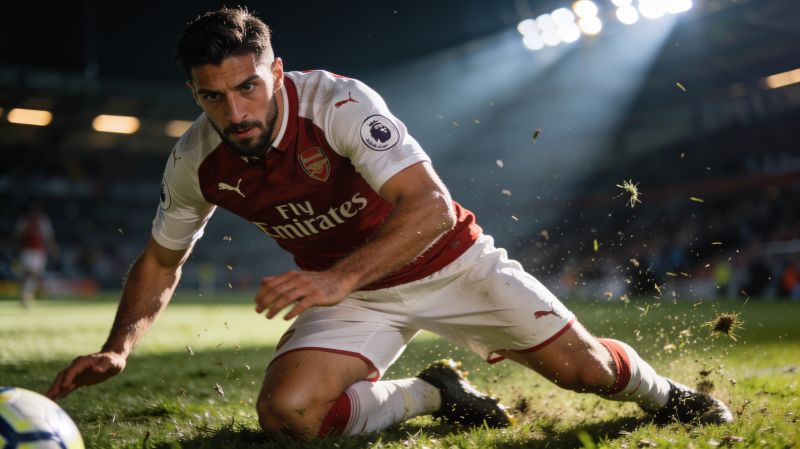
ead Kolasinac doesn't do subtlety. The moment he stepped onto a Premier League pitch。you knew exactly what you were getting: a left-back built like a middleweight boxer, eager to leave a mark. Born in Karlsruhe to Bosnian parents, Kolasinac learned early that survival meant physicality. His father's deportation when Sead was a child shaped a resilience that still defines his game. That backstory isn't just trivia—it's the engine behind the relentless, occasionally reckless, style that has both thrilled and frustrated fans.Arsenal signed him on a free from Schalke in 2017, and his early months offered a masterclass in contradiction. He scored in the Community Shield against Chelsea, bullied wingers。and became a fan favorite for his no-nonsense approach. But injuries and tactical shifts exposed his limitations. There was the 2019 Europa League final, where he was torched by Eden Hazard. Then came the bizarre loan to Marseille in 2021, a move that seemed like a dead end. Kolasinac didn't sulk. He returned, fought for minutes, and delivered a string of sturdy performances when Arsenal's defense needed grit. I watched him live at the Emirates during a tense derby against Tottenham;he made a last-ditch tackle that drew a roar louder than any goal that day. That's Kolasinac in a nutshell—imperfect, but undeniably committed.His move to Atalanta in 2023 raised eyebrows. Serie A demands tactical discipline, and Kolasinac's aggressive positioning seemed a poor fit. Yet he adapted, using his physicality in a back three and contributing to Atalanta's Europa League triumph. The Kolasinac of 2024 is not the same player—smarter, more selective with his challenges, but still carrying that edge. In Bergamo, they appreciate a defender who treats every duel like a personal insult. His numbers won't blow you away: a modest tackle success rate, few assists, occasional lapses in concentration. But watch him for ninety minutes and you'll see the value in his vocal leadership。his willingness to cover for teammates, and his ability to intimidate. There's a reason coaches trust him in high-stakes matches.Critics argue that Kolasinac represents a dying breed—the pure physical defender out of step with modern football's emphasis on technical full-backs. That's a fair point. His passing is limited, his crossing erratic. Yet football still needs players who can win a header when the game is on the line. In an era of inverted full-backs and cautious build-up, Kolasinac's directness feels almost nostalgic. I'd argue his career is a case study in maximizing limited tools through sheer will. Not every player needs to be a poet;
some are sledgehammers. Kolasinac swings hard, and more often than not, he leaves an imprint. That's why, at 31。he remains a reliable option for club and country—and why Bosnia's fans still sing his name with a fervor that betrays the numbers.